
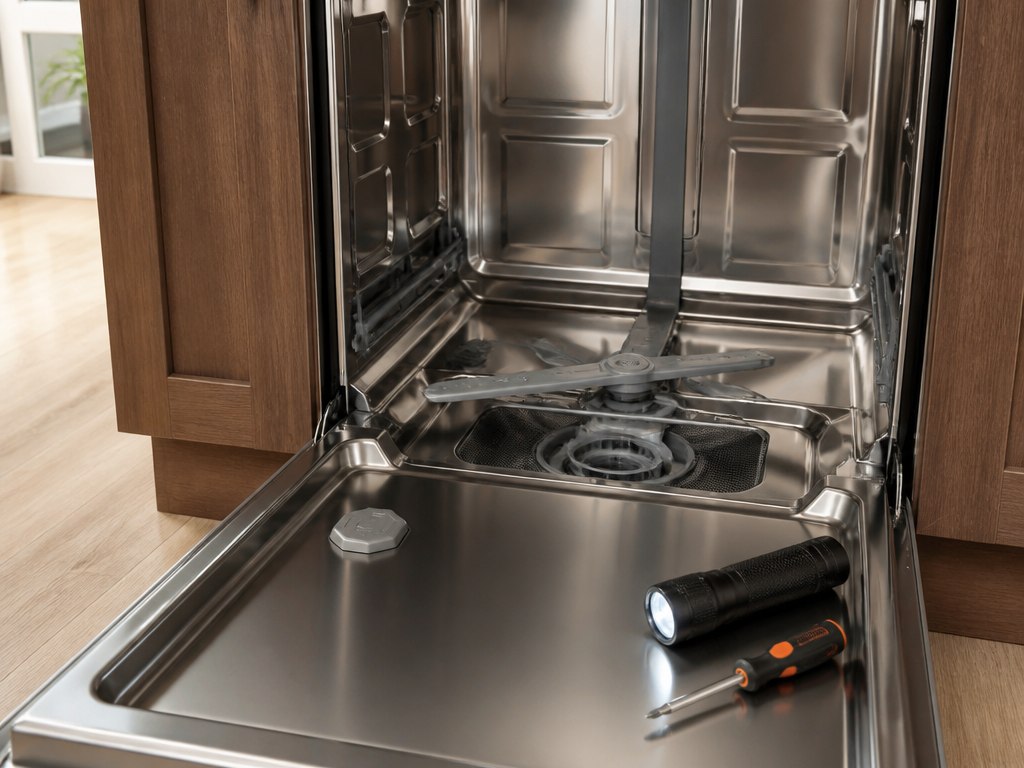

Cloudy glasses can come from two very different causes: removable film or permanent etching. Before changing detergent, rinse aid and water-softener settings all at once, start with the dishwasher’s filter and a simple…
Cloudy glasses can come from two very different causes: removable film or permanent etching. Before changing detergent, rinse aid and water-softener settings all at once, start with the dishwasher’s filter and a simple glass test.
Remove and clean the user-accessible filter according to the manual. A loaded filter reduces water circulation and can let fine debris redeposit on glassware. Check that the spray arms can turn freely and that visible spray openings are not blocked by food particles.
Next, look at detergent amount and local water hardness. Too little detergent in hard water can leave mineral film, while too much detergent in softer water can contribute to poor rinsing. Rinse aid can improve water sheeting and drying, but it should be adjusted deliberately rather than maxed out by default.
To distinguish film from etching, try cleaning one cloudy glass by hand using a method appropriate for the glass. If the cloudiness disappears, the dishwasher process or water chemistry is the likely cause. If it remains and the glass surface feels permanently dull, etching may already have occurred and cannot be “washed off” by a repair.
If the dishwasher also leaves food behind, drains poorly or stops mid-cycle, the problem is broader than glass appearance. Read Standing Water in the Dishwasher Tub? Start With the Filter and Dishwasher Panel Gone Silent? Work Through This Before Booking Service.
For mineral-heavy water, see Water Hardness Varies by Zip Code — Your Descaling Schedule Should Too.
### Maintenance order
Filter first, loading second, detergent and rinse-aid settings third, water hardness fourth. That sequence avoids changing so many variables that you no longer know which one improved the result.
Monthly is a good baseline, more often for heavy use or households that don't pre-rinse dishes.
Cloudy glasses, gritty plates, standing water, or a faint odor after a cycle are the most common signs.
Yes — it can allow debris into the pump and spray system, so always refit the filter before running a cycle.
A built-in wine column performs best when the environment around it is as stable as the temperature inside it. Good care is less about frequent “deep cleaning” and…
Panel-ready refrigeration is designed to disappear into the kitchen, but the installation still has to breathe and close correctly. The most useful maintenance habits are the ones that…
Refrigerator maintenance is mostly about helping the appliance move heat and keep cold air where it belongs. On a built-in Bertazzoni refrigerator, that means paying attention to door…
Share a few details and we’ll confirm an appointment. Prefer to talk? Call us and we’ll help right away.