

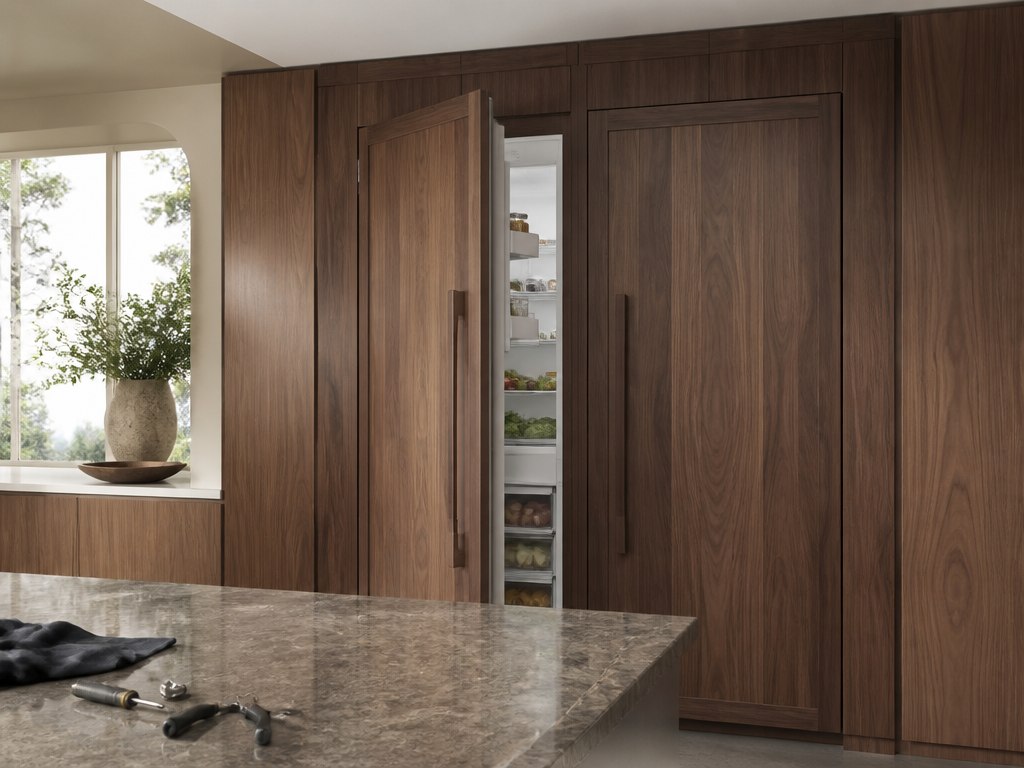
A panel-ready refrigerator is meant to disappear into the cabinetry, but that seamless look depends on airflow paths that were carefully planned during installation — and just as easily blocked afterward.
Caring for a built-in unit is less about the appliance itself and more about respecting the space it was designed to sit in.
Respect the clearances, even when they're invisible
Toe-kick grilles, top vents, and side clearances are not decorative — they are the intake and exhaust path for the refrigeration system. Stored items, rugs, or renovation debris pushed against these openings can raise internal temperatures without any part actually failing.
If cabinetry work happens nearby — new flooring, a backsplash, an appliance swap next door — it is worth rechecking that grilles and clearances were not accidentally covered afterward.
| Task | How often | Why it matters |
|---|---|---|
| Check grille and vent clearance | Seasonally | Maintains designed airflow |
| Wipe door gaskets | Monthly | Keeps compartments sealed |
| Check panel and door alignment | As needed | Prevents binding or gaps |
Panel alignment affects more than looks
A custom door panel that has shifted slightly can rub against surrounding cabinetry or fail to close flush, which lets warm air in at the edge even though the appliance's own gasket is fine.
Most panel-ready models include adjustable hinges for exactly this reason; consult the installation guide before assuming a misaligned panel means a mechanical fault.
Safe to try
- Keep grilles and vents clear
- Check panel alignment periodically
- Clean seals with mild products only
Leave to a technician
- Block toe-kick or top ventilation
- Force a misaligned panel shut
- Remove the compressor compartment cover
Most performance issues on built-in refrigeration trace back to something around the appliance rather than inside it — a blocked vent, a shifted panel, cabinetry pressed too close. Protect the clearances, and leave the sealed system itself to a qualified technician.
Frequently asked questions
Built-in units rely on a specific, designed airflow path through cabinet vents; freestanding units have more open airflow around them.
Yes — a panel that does not sit flush can let warm air in at the edge even if the appliance's own seal is intact.
Check the installation guide first; if adjustment does not resolve it, a technician familiar with built-in installations should handle it.
Similar articles
Cellar-Like Conditions at Home: Caring for a Built-In Wine Column
Stable temperature, clean seals, and steady habits protect both the appliance and what's stored inside it.
Dryer Vent Care: The Maintenance Task That’s Also a Safety Task
Clearing lint and checking the vent path improves drying time and reduces a genuine fire risk.
Coil and Seal Care for a Bertazzoni Refrigerator
Two small habits — clean seals and clear airflow — do most of the work in keeping refrigeration efficient.