
Wine storage problems are easy to miss because the display can still look normal while the cabinet is slowly drifting away from its setpoint. The first useful step is to measure the actual temperature with a reliable…
To check a drifting wine cooler, measure the actual temperature in each zone with a thermometer left to stabilize, then look at recent loading, door openings, door sealing and clear ventilation. A cabinet that is warm after a known event usually needs time, not a repair. Book service when the temperature keeps moving despite stable conditions or when a code or fan change appears.
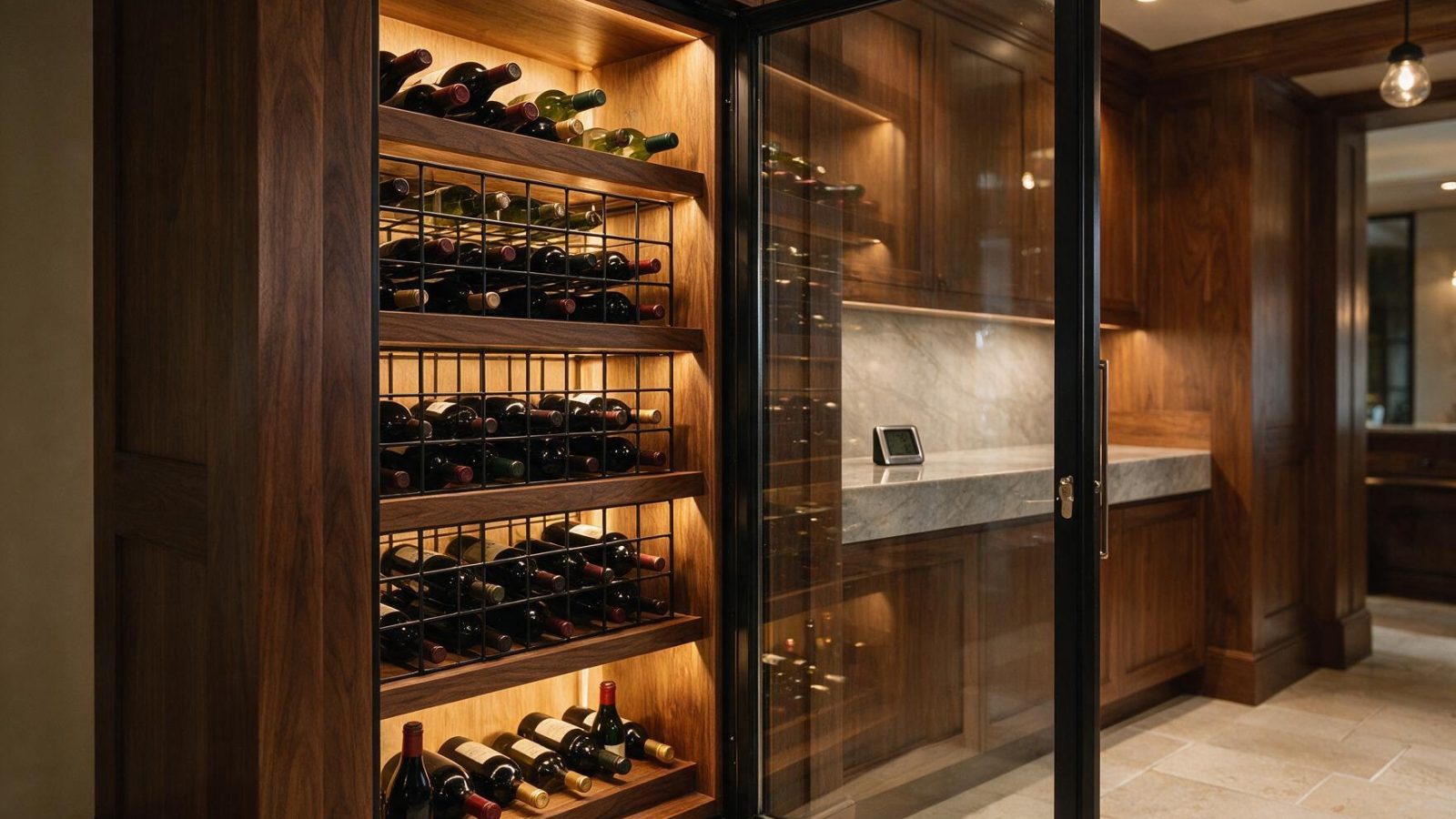
Wine storage problems are easy to miss because the display can still look normal while the cabinet is slowly drifting away from its setpoint. The first useful step is to measure the actual temperature with a reliable thermometer placed inside the compartment. Give it enough time to stabilize; a reading taken immediately after opening the door tells you more about the room than the cabinet.
The user manual for one 18-inch Bertazzoni column describes two zones, with a default of 54 F in the upper zone and 50 F in the lower, each adjustable between 39 and 64 F. If the upper zone is set below 54 F, the lower zone should not exceed 50 F. Knowing the set values and that rule helps you judge whether a reading is a drift or simply a setting that was changed.
If the measured temperature is higher than expected, look at recent usage before assuming a refrigeration failure. A newly loaded cabinet, repeated door openings or bottles packed tightly against internal air paths can temporarily change temperature distribution. Make sure the door closes without resistance and inspect the gasket for debris, folds or sections that no longer contact the frame evenly.
Built-in wine columns also depend on the installation around them. Ventilation paths at the toe kick, grille or cabinet opening must remain clear. A decorative panel or recent storage change can reduce airflow without anything inside the refrigeration circuit being defective. If the unit has multiple zones, compare them. A problem limited to one zone provides different diagnostic information than a whole cabinet warming together.
This table maps what you might see against what it can point to and a safe next check.
| Symptom | What it can point to | What you can safely check |
|---|---|---|
| Warm right after loading bottles | Room-temperature bottles absorbing heat | Wait for the cabinet to settle before judging |
| Warm after entertaining | Frequent door openings | Keep the door closed and recheck after the settling period |
| Both zones warm together | Whole-cabinet cause such as blocked ventilation, dirty condenser area or sealing | Clear the toe-kick or grille area and check the gasket |
| Only one zone warm | A zone-specific cause | Compare the two thermometer readings with the two setpoints |
| Display shows a zone too warm message | The control has detected the drift | Read the message and compare with your thermometer |
| Check Cond appears | A condenser cleaning reminder | Switch off, wait about 30 minutes, clean as the manual describes |
Listen for what has changed. Normal fans and compressor cycles are expected, but a fan that repeatedly scrapes, a compressor that starts and stops unusually often, or a zone that develops frost while another warms can justify a deeper diagnostic visit. Do not remove service panels to investigate those components yourself.
The same manual says to wait at least 12 hours at first start before loading bottles, and that reaching a changed setpoint can take 6 to 12 hours. That is longer than many owners expect, so a reading an hour after an adjustment tells you little. Temperatures can also drift slightly after frequent door openings or loading room-temperature bottles, and the manual stresses keeping temperature constant because swings can age wine early.
On that model the display can show a power failure message, a door open warning, zone too warm or too cold, and error codes. For a code, the manual says to touch Alarm to see it and then call customer care. A “too cold” message asks for a 12-hour wait. Messages are not a diagnosis, but they narrow the question: a door warning points to sealing or a left-open door, while a code points to a control or cooling matter.
Temperature drift matters because wine responds to sustained conditions, not only dramatic failures. If the cabinet is several degrees warm for a day and then recovers, note the timing, room conditions and door use. Repeated patterns are more useful to a technician than a single snapshot.
A long compressor run in a warm room is described as normal in that manual, so judge duration together with the measured temperature rather than by sound alone.
For preventive care, see Cellar-Like Conditions at Home: Caring for a Built-In Wine Column. If the temperature keeps moving despite stable loading and good ventilation, continue with When a Wine Cooler Needs Real Diagnostic Tools, Not Just Patience.
A technician can then compare sensor data, fan operation, cooling performance and control behavior without starting from zero.
The display shows the set or sensed value, while a thermometer in the compartment shows what the bottles experience. A gap that stays large under stable conditions is worth reporting, because a technician can compare sensor readings with actual temperature.
On one Bertazzoni column manual, a changed setpoint can take roughly 6 to 12 hours. Avoid changing it again during that time, and check your own manual for the figure that applies.
Small drifts after frequent openings or after loading room-temperature bottles are described as possible in that manual. If the cabinet does not return to its setpoint once things are stable, the pattern is no longer explained by use.
Losing cooling, building frost, or pooling water? We diagnose Bertazzoni refrigerator faults and restore reliable, efficient cooling.
Bertazzoni refrigerator diagnostics and repair — cooling loss, frost, leaks and dispenser faults.
Tightly packed bottles can restrict internal airflow, leaving certain zones warmer even when the system works correctly.
Yes — heat from a nearby oven, dishwasher, or direct sun can measurably affect a wine cooler's ability to hold temperature.
When it persists after checking loading, door seal, and surrounding heat, or when the drift keeps increasing over time.
When one gas burner clicks repeatedly, lights only on one side or takes several attempts to ignite, the safest first checks are visible and external. A burner cap…
A modern refrigerator is not silent. Fans speed up and slow down, the compressor changes tone, refrigerant moves through the system and the ice maker cycles. The useful…
Uneven browning does not automatically mean the oven is “running hot.” Rack position, cookware, convection airflow, door opening and food placement can all create a repeatable pattern before…
Share a few details and we’ll confirm an appointment. Prefer to talk? Call us and we’ll help right away.