

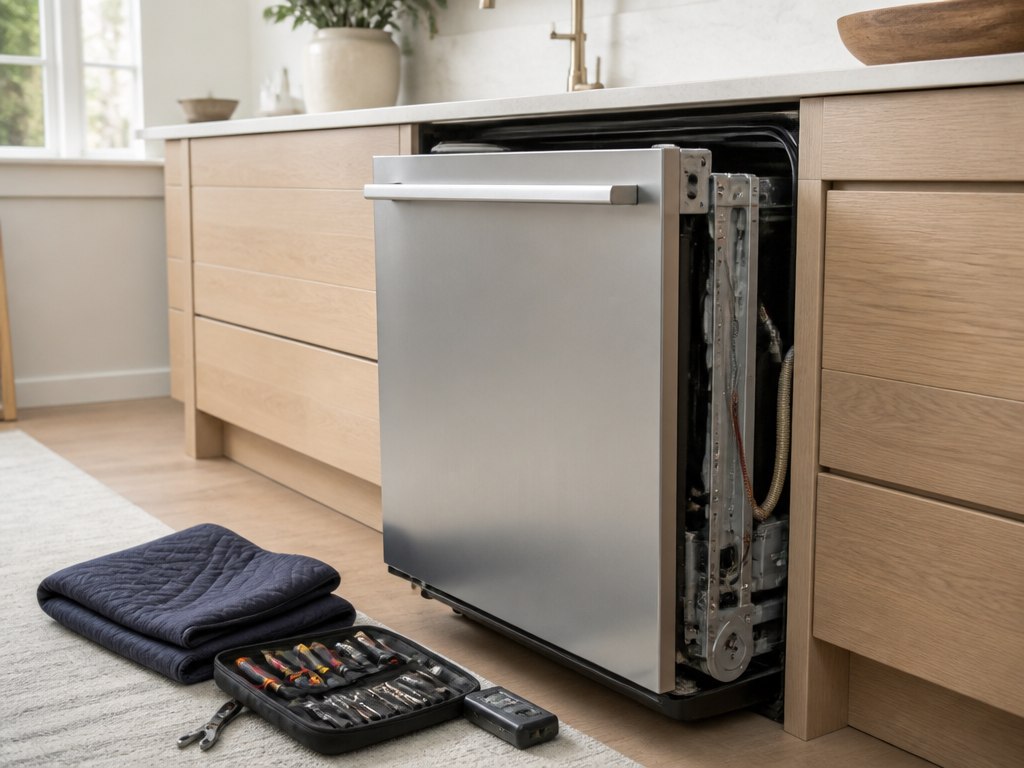
A small puddle under an appliance is usually a plumbing question. A puddle that reaches an outlet, a power strip, or an appliance's electrical base is a different kind of question entirely, and it comes with a different first move.
This is one of the few situations in a kitchen or laundry room where the correct response does not depend on figuring out the source first.
Power off, before anything else
Do not touch a wet appliance, its plug, or a nearby outlet, even to unplug it. If a breaker panel is dry and accessible without stepping through water, switch off the relevant circuit there instead.
If reaching the panel safely is not possible, stay away from the area and treat it as an electrical hazard until power can be cut from a safe location or by a professional.
| Situation | Safe action | Avoid |
|---|---|---|
| Water reaching an outlet or plug | Cut power at a dry breaker panel | Touching the wet plug or outlet |
| Small drip, no water near electrical parts | Contain water, observe source | Ignoring it indefinitely |
| Unclear or spreading water source | Stop use, book diagnosis | Running another cycle to test |
Once power is confirmed off
Only after the relevant circuit is off should you approach the area to contain the water and look for an obvious, external source, such as a disconnected supply line or a loose hose fitting.
If the source is not obvious from the outside, do not open the appliance to look further — that is exactly the kind of internal inspection a technician should perform once the electrical risk has been addressed.
Safe to try
- Cut power at the breaker before approaching
- Contain and mop up standing water
- Photograph the visible situation for the technician
Leave to a technician
- Touch a wet plug, cord, or outlet
- Continue operating the appliance
- Open electrical or water connections yourself
Water and electricity together are one of the few household situations that calls for immediate, decisive action rather than investigation. Cut the power safely first, and let a technician handle everything from there once the immediate hazard is gone.
Frequently asked questions
No — do not touch a wet plug or outlet. Switch off power at a dry, accessible breaker instead.
Stay away from the area and treat it as hazardous until power can be cut by a professional.
Only from the outside, once power is confirmed off. Do not open the appliance to look for an internal leak.
Similar articles
A Burning Smell From Your Range or Oven: What It Means to Stop Now
Some smells are a warning label, not a symptom to work around. Here is how to respond safely.
Electrical Warning Signs Every Kitchen Should Take Seriously
Sparking, tripped breakers, and scorch marks are not routine appliance quirks — here is how to respond.
Gas Range and Oven Safety: The Habits Worth Building
A few daily habits and one hard rule about gas odor keep a gas kitchen safe.