
Useful troubleshooting has a boundary. The safest homeowner checks are external, reversible and documented: confirm settings, inspect a removable filter, look for a kinked hose, clean a burner cap, measure refrigerator…
Homeowner checks end where a step would expose live electrical parts, open a gas path, touch sealed refrigeration, bypass a safety device or require pulling out a built-in appliance. Settings, removable filters, a visible hose, a cool burner cap, a thermometer reading and a manual-approved reset stay on the homeowner side; everything beyond belongs to a technician.
Useful troubleshooting has a boundary. The safest homeowner checks are external, reversible and documented: confirm settings, inspect a removable filter, look for a kinked hose, clean a burner cap, measure refrigerator temperature or perform a reset described in the manual. A good test is whether you can undo the step completely and whether the manual describes it for your model.
The boundary is crossed when the next step requires exposing live electrical parts, opening a gas path, accessing sealed refrigeration, bypassing a safety switch or removing a built-in appliance without the right equipment.
The line looks different in each part of the kitchen. On a range, cleaning burner caps and heads after they cool is fine, but the manual for one Bertazzoni range says installation and any adjustment or conversion between natural and LP gas must be done by a qualified installer, service agency or the gas supplier. On a refrigerator, you can clean accessible gaskets and read temperature, but the sealed system is closed. On a dishwasher, you can clean the filter and check the visible hose, but wiring and the control board stay closed. On an induction cooktop, you can check cookware and settings; internal inspection is a technician job.
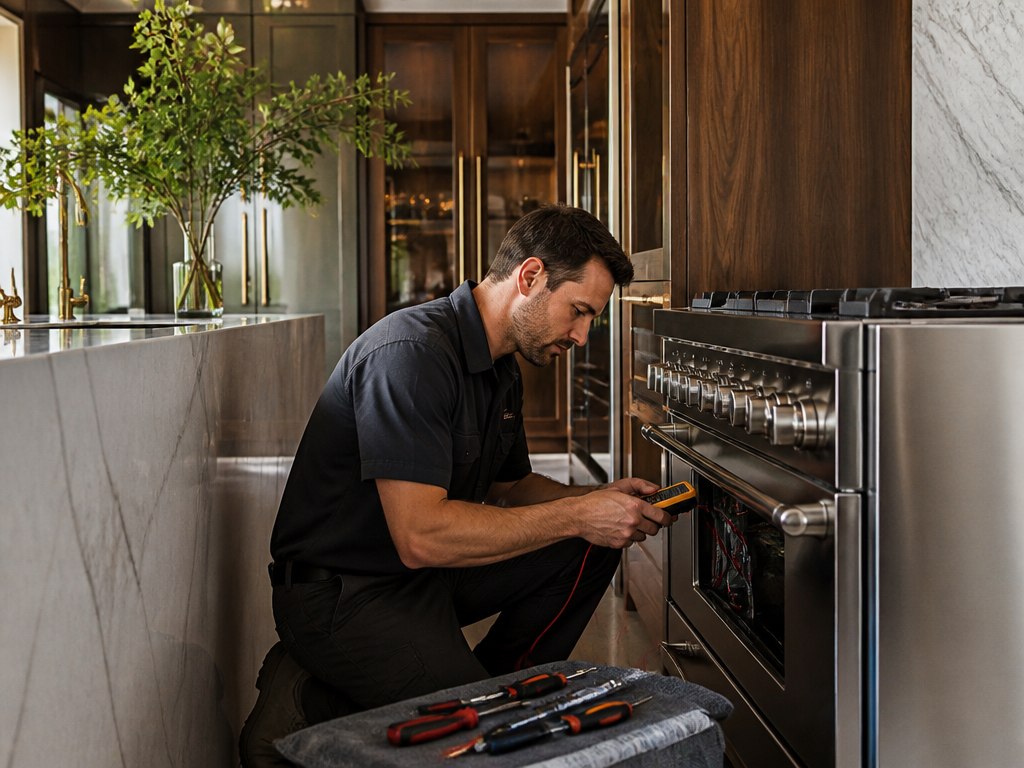
High voltage deserves special respect. Ovens, induction cooktops and some other appliances operate on circuits capable of serious injury. A multimeter is not a safety plan if the person using it does not know the circuit and the correct test method.
Gas work has the same rule. Burner cleaning is maintenance; adjusting pressure, replacing a valve or opening a gas connection is repair work. Refrigerant systems are also closed systems that require proper tools and procedures.
A safe homeowner check has four traits: it is described in your manual, it leaves the appliance’s housing closed, it can be reversed, and it does not require you to defeat a safety device. Examples are confirming a setting, cleaning a removable part, reading a thermometer and following a manual-documented reset once. If any of the four traits is missing, you have reached the boundary.
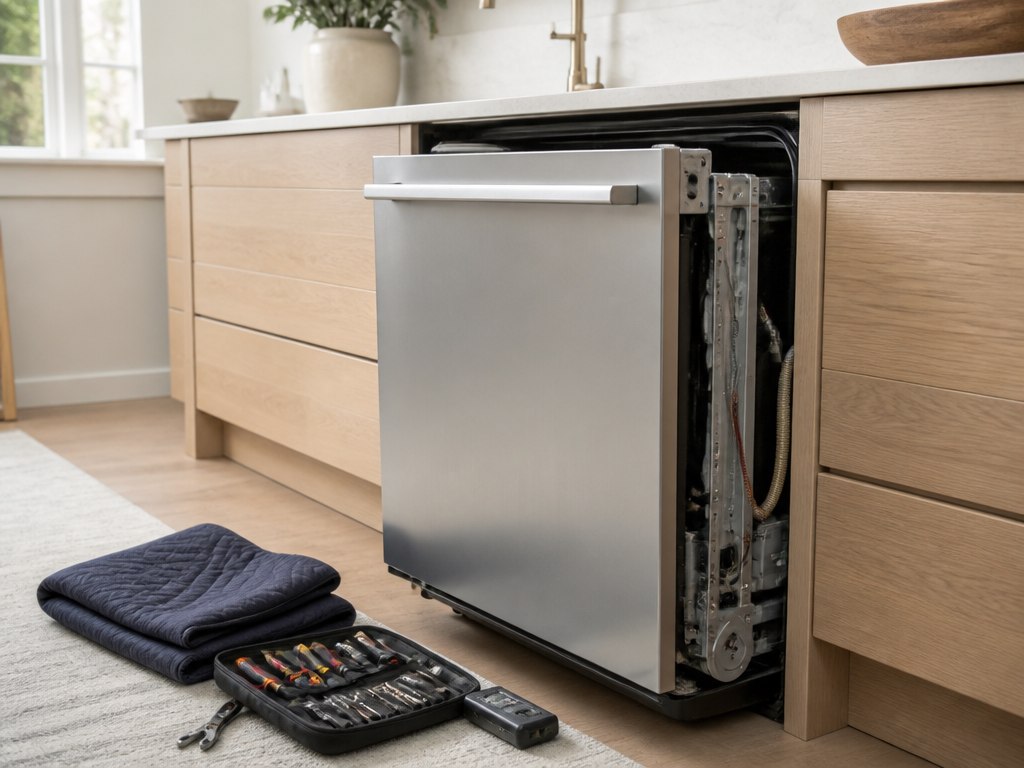
Built-in appliances create another risk: property damage. Panel-ready refrigerators and integrated dishwashers can damage flooring, cabinetry and decorative panels when pulled incorrectly. A technician should decide how the appliance needs to be accessed. Moving a heavy built-in appliance also puts strain on water lines, power cords and gas connections that you cannot see.
The goal is not to make homeowners afraid of every check. It is to keep the easy checks easy and the dangerous work professional.
| Symptom | What it can point to | What you can check |
|---|---|---|
| A burner will not light or the flame looks wrong | Cap not seated, blocked ports or a gas-type issue | Re-seat a cool cap and clean per the manual; do not adjust gas parts |
| Breaker trips repeatedly | A circuit or appliance fault | Reset once, then leave it off and book service |
| Refrigerator warm but running | Airflow, door closure or a system fault | Read real temperature and clean accessible areas only |
| Water under a dishwasher | Hose, drain or pump issue | Shut off supply, check what is visible, and stop if water nears power |
| Smell of gas | An emergency | Follow the manual, avoid switches and phones inside, and leave to call the gas supplier |
If you are not sure which side of the line a step falls on, stop and read the manual or ask. Hesitation is a useful signal.
No check is worth risking a shock, a gas leak or a flooded floor.
The boundary also applies to repeated attempts: if the same safe check has failed twice, the next step is a call rather than a more aggressive version of the same check.
For electrical red flags, read Electrical Warning Signs Every Kitchen Should Take Seriously. For gas appliances, see Gas Range and Oven Safety: The Habits Worth Building. For leaks near power, follow Water Near an Outlet: The One Situation That Overrides Every Other Rule.
Some situations are not troubleshooting at all. The manual for one Bertazzoni range says that if you smell gas you should not light any appliance, touch electrical switches or use a phone in the building, and should call the gas supplier from a neighbor’s phone or the fire department if the supplier cannot be reached. Water near a live outlet, a burning smell, smoke from an appliance or visible scorching all mean stop using the appliance and shut it off at the breaker or valve if that is safe to do.
Panel-ready and integrated models depend on cabinet cutouts, trim and carefully set clearances. Pulling a unit forward can twist a hose, stretch a cord or scratch flooring, and re-installing it correctly takes the right equipment. If the only way to reach a check is to extract the appliance, treat that as the boundary and leave it for a technician.
Staying inside the boundary also protects service options. Opening a panel or bypassing a safety device can create new damage and make it harder to identify the original fault. Report what you did and saw, and let the technician choose the test method.
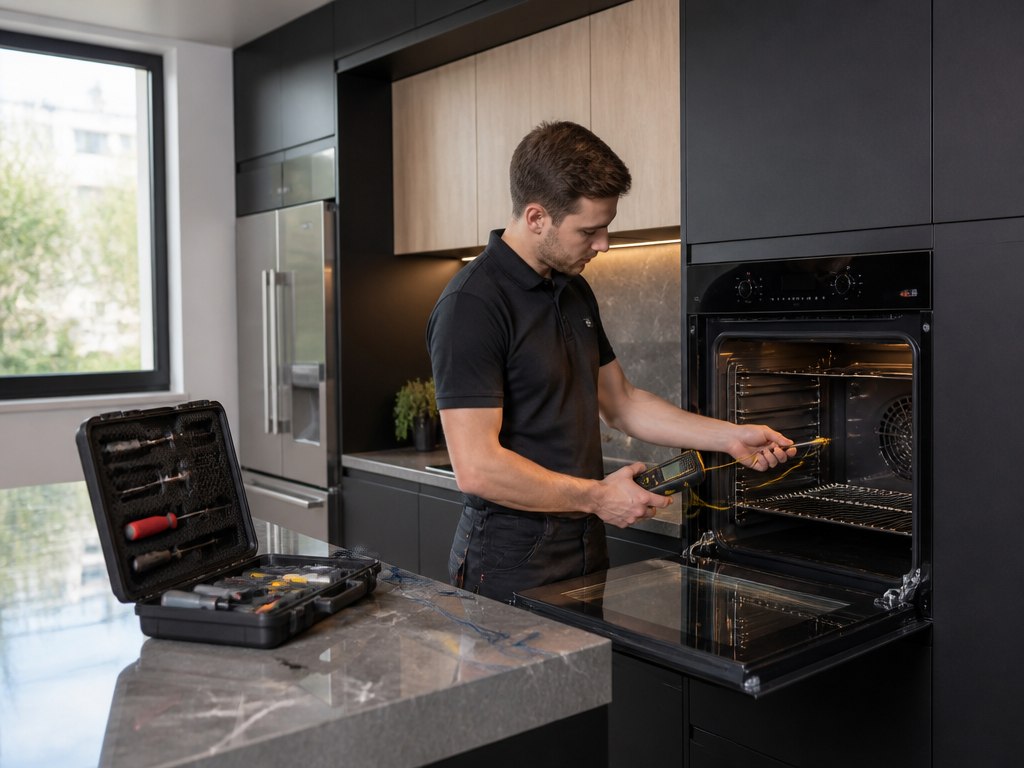
Oven not heating, uneven baking, or showing an error? We diagnose Bertazzoni oven faults with a safety-first approach.
Induction or electric cooktop not heating or responding? We diagnose Bertazzoni cooktop faults safely and precisely.
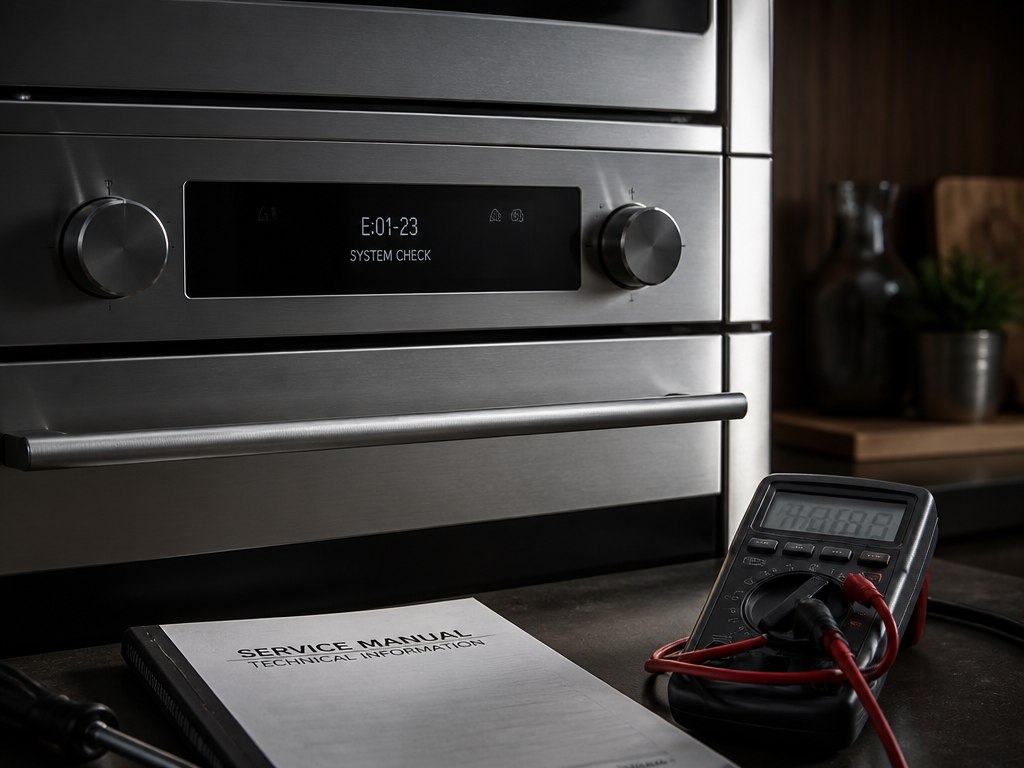
Bertazzoni oven diagnostics and repair — heating, temperature accuracy and error codes.
Bertazzoni cooktop diagnostics and repair — induction detection, heating and control faults.
If it's described in the use-and-care manual as homeowner maintenance and doesn't involve gas, electricity beyond a plug, or a sealed system, it's generally safe.
Looks can be deceiving — internal wiring and control boards should always be left to a licensed technician, regardless of how straightforward the fix appears.
The model number, a clear description of the symptom, when it started, and the results of any safe checks you've already made.
When water reaches an outlet, plug, power strip or electrical compartment, troubleshooting stops. The priority is not finding the leak; it is avoiding electrical contact.
Not every oven smell is dangerous. A new appliance, a recently cleaned cavity or food spilled on a hot surface can produce odor. The important distinction is whether…
Electrical faults often give warnings before a complete failure. A breaker that trips once during an unusual event may be explainable; a breaker that trips repeatedly under normal…
Share a few details and we’ll confirm an appointment. Prefer to talk? Call us and we’ll help right away.