

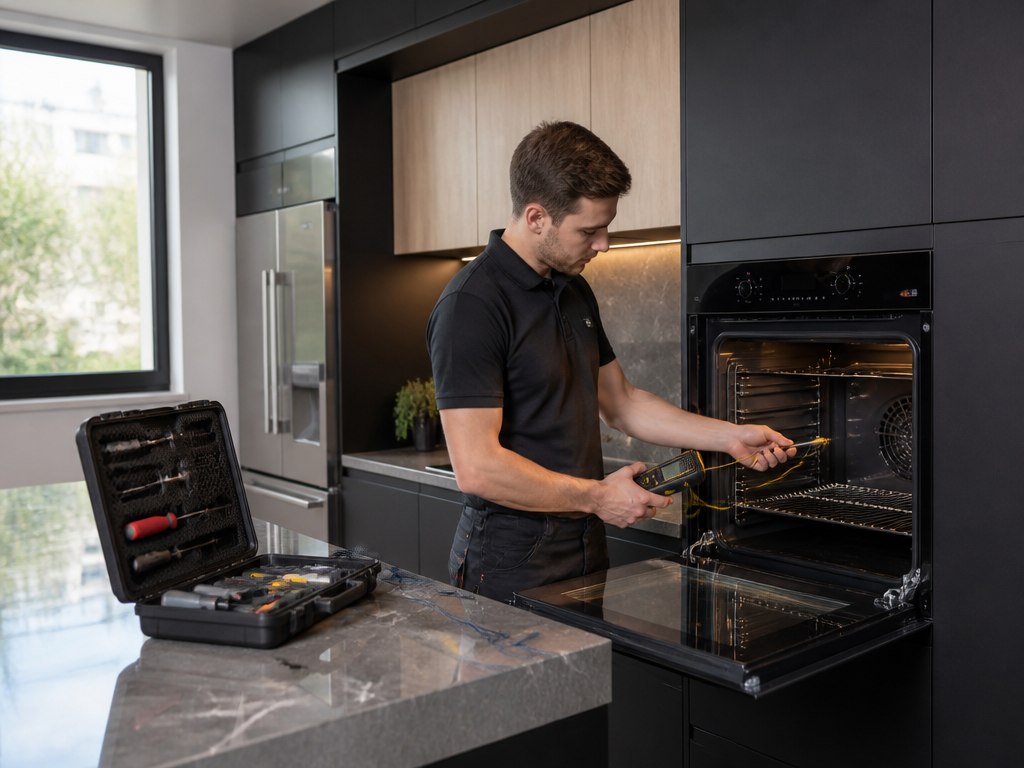
Most appliance symptoms leave room for a bit of troubleshooting. Electrical ones generally do not. When wiring, plugs, or internal components start showing distress, the safest response is usually the simplest: stop, disconnect, and call for help.
This applies across a kitchen full of high-power equipment — ranges, ovens, dishwashers, coffee machines, refrigeration — anything drawing significant current deserves the same respect.
Signs that mean stop now
Visible sparking, a scorched or melted look around a plug or outlet, a persistent electrical or burning smell, and a breaker that trips every time an appliance is used are not symptoms to work around. They indicate a fault severe enough to interrupt normal operation.
A warm plug or cord after long, heavy use of a high-power appliance can sometimes be normal, but a hot plug on light use, or one that is hot enough to be uncomfortable to touch briefly, is not.
- Sparking at an outlet or plug
- Scorch marks or a melted smell near a cord
- A breaker that trips repeatedly on one appliance
- A persistent burning or electrical odor
What a homeowner can safely do
Turn the appliance off and, if it can be reached without contact with the affected area, switch off the circuit at the breaker panel. Unplug only if the plug and outlet look and feel unaffected.
Do not reset a tripped breaker repeatedly to see if it holds, and do not open a panel or cover to look for the source of a smell or spark yourself.
Safe to try
- Switch off the appliance and, if safe, the breaker
- Note which appliance and outlet were involved
- Call a licensed technician or electrician
Leave to a technician
- Reset a breaker repeatedly
- Touch a warm or scorched plug
- Remove an appliance panel to inspect wiring
Electrical warning signs are one of the few areas where hesitation is the wrong instinct. Acting early — switching off, not resetting, and calling a professional — is what keeps a small fault from becoming a bigger one.
Frequently asked questions
A plug that is warm after heavy, prolonged use of a high-power appliance can be normal; a hot plug on light or brief use is not and should be checked.
No. A breaker that trips repeatedly on one appliance is protecting the circuit — repeated resets can mask a real fault.
No. Internal wiring should only be inspected by a licensed technician or electrician, even with power disconnected.
Similar articles
Water Near an Outlet: The One Situation That Overrides Every Other Rule
When water and electricity meet near an appliance, the response is always the same: power off first, everything else second.
A Burning Smell From Your Range or Oven: What It Means to Stop Now
Some smells are a warning label, not a symptom to work around. Here is how to respond safely.
Gas Range and Oven Safety: The Habits Worth Building
A few daily habits and one hard rule about gas odor keep a gas kitchen safe.