

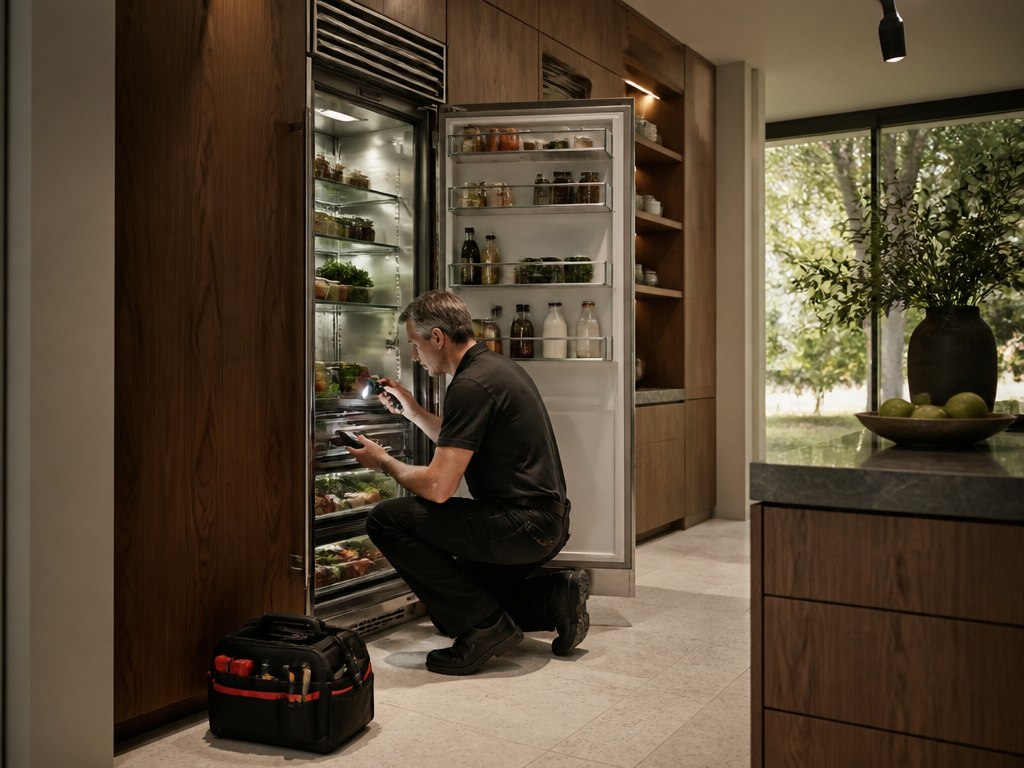
A refrigerator is never actually silent — compressors cycle, defrost heaters click, and water lines gurgle as ice forms. Most of what you hear day to day is the appliance simply doing its job.
The goal here is not to eliminate every noise, but to recognize which ones are ordinary background sound and which ones are worth paying closer attention to.
Sounds that usually need no action
A soft, steady hum during compressor operation, an occasional gurgle or hiss as refrigerant moves through the system, and a light click when the unit switches modes are all typical, especially in a quiet kitchen where they become more noticeable.
Sounds tied to the ice maker — a thump as cubes drop, or a brief buzz as the water valve fills — are also expected and do not indicate a problem on their own.
- Steady, low hum from the compressor area
- Occasional gurgle or hiss from refrigerant flow
- Ice maker thump or fill-valve buzz
Sounds worth a closer look
A grinding noise, a buzz that gets louder, or a rattle that has appeared recently and does not go away when you clear items from around and behind the cabinet, is a different category — these can point to a fan, motor, or leveling issue.
Pay closer attention if a new noise arrives alongside a cooling complaint, since the combination is more informative to a technician than either symptom alone.
| Sound | Common meaning | When to act |
|---|---|---|
| Gentle hum | Normal compressor cycle | No action needed |
| Rattle when cabinet is touched | Loose item or leveling | Clear surroundings, check level |
| New grinding, with warm interior | Fan or system issue | Book a diagnosis |
Listening to a refrigerator over time is a useful habit, because it makes new or changed sounds easy to notice. A new grinding or straining noise, especially paired with a temperature change, is the point to stop guessing and schedule a technician visit.
Frequently asked questions
Yes, a steady, low hum during compressor operation is normal and expected.
Note when it occurs — during defrost, ice-making, or door opening — since that pattern helps identify the cause.
When it is new, getting louder, or accompanied by a cooling problem, it is time to arrange a diagnosis rather than wait it out.
Similar articles
Morning Espresso Interrupted? Check These Before Assuming the Worst
Water tank position, service containers, and maintenance prompts explain most brewing interruptions.
Wine Doesn’t Forgive a Warm Week — Checking a Drifting Wine Cooler
Loading, door seal, and surroundings explain most temperature drift in a wine column.
One Burner Won’t Light Evenly on Your Bertazzoni Range? Start Here
A weak or delayed burner is usually about the cap and ports, not the gas valve behind it.