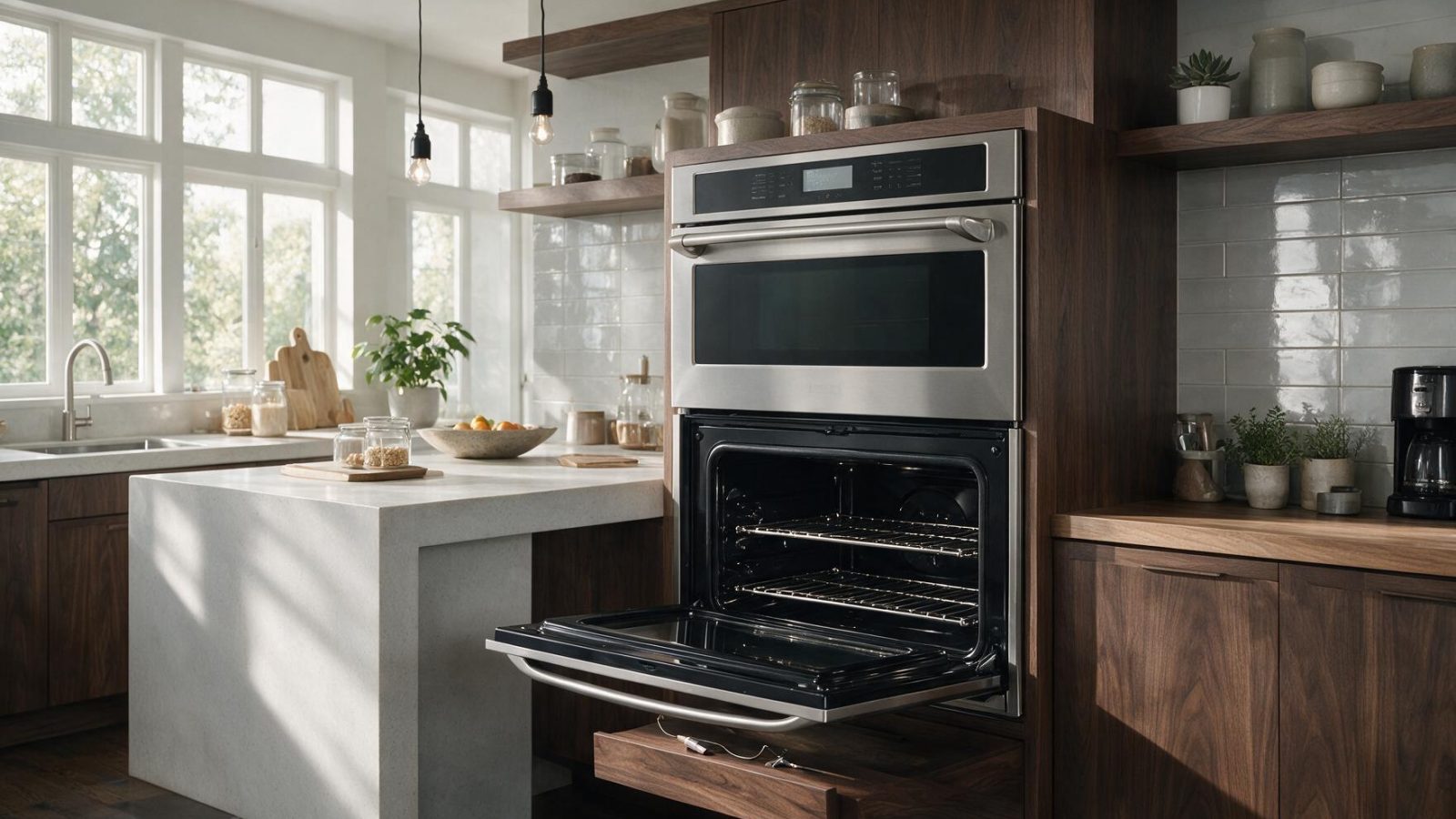

A Bertazzoni oven that seems slow to heat is often still preheating, set in a mode that behaves differently, or short of power, and a few outside checks sort out which.
A Bertazzoni oven that seems slow to reach temperature is often waiting on something ordinary: a preheat that has not finished, a loaded rack, a mode that behaves differently from conventional bake, or a power or setting issue. Check the preheat tone and the orange thermostat light first, then power and settings. If the oven still will not heat after those checks, book a diagnosis.
On Bertazzoni ranges, preheat time depends on the temperature you set and the number of racks in the oven, and the oven signals the end of preheating with a tone. The manual for one dual fuel range describes an orange front indicator light as the oven thermostat light. It stays on during preheat and then cycles on and off with the thermostat. A light that goes off and on after preheating is therefore normal, and not a sign that the oven has stopped heating.
Extra racks and large pans slow things down. If you are checking whether the oven is “reaching temperature,” wait for the tone with the door closed, because opening it lets heat out and restarts the climb.
The self-clean range manual says that if the oven does not heat, you should check that the showroom function is not active. If the oven will not operate at all, check power and the breaker. These are checks of the outside of the appliance, and they take a minute.
The manual for one gas range with an electric oven also describes a thermostatically controlled cooling fan. Pushing heated air into the room while the oven runs is normal, and the Bertazzoni US FAQ says the fan can keep running after the oven is turned off because it is cooling the oven. A running fan does not tell you the oven is heating, and a fan that continues after shutoff is no fault.
Sometimes the oven is reaching temperature and the result still seems wrong. The manual suggests several causes for food that browns too much or too little:
Convection bake uses the upper and lower elements plus the fan, and the manual recommends it for multiple racks, using levels 3 and 5 for two racks. The convection fan runs in Convection Broiler, Convection and Defrost functions.
| What you see | What it can point to | What you can check |
|---|---|---|
| Orange light on, no tone yet | Preheat still in progress | Wait with the door closed; remove extra racks |
| Orange light cycling after the tone | Normal thermostat operation | Nothing to fix |
| Oven does not heat at all | Showroom function on, or no power | Showroom setting, breaker, power to the range |
| Food browns unevenly | Rack, pans or mode | Rack position, pan size and spacing, convection adjustment |
| Fan runs after switch-off | Cooling fan doing its job | Nothing to fix |
| Oven will not heat and fan has failed | The manual says a failing cooling-fan motor inhibits the elements | Stop and call service |
If the oven reaches temperature once the showroom mode is off, the setting was the cause. If it heats but cooks unevenly, the oven may be fine and the rack, pans or mode are the variable. A cycling thermostat light proves little about accuracy, and the manual’s cooking tables describe typical results, not a calibration test. None of the outside checks can confirm whether an element or sensor is working.
The manual states that a failing oven cooling-fan motor inhibits the heating elements, so the oven will not heat, and it directs the owner to after-sale service. That is a repair that cannot be confirmed by looking at the oven.
Book a diagnosis if the oven does not heat after the showroom function, power and breaker are checked, if it never reaches the preheat tone, or if the breaker trips. Gas or electrical work is not an owner task. If you smell gas, do not light any appliance or touch switches, leave the building, and call the gas supplier from a neighbor’s phone, or the fire department if the supplier cannot be reached. Have the model number, what you set, and what the light and tone did.
Before calling, run one test and write down what happened: the temperature and mode you set, how many racks were in the oven, whether the preheat tone sounded, and what the orange light did. Note whether the problem appears in every mode or only in convection. That record separates a setting or loading issue from a heating fault, and it keeps a technician from repeating checks you have already made.
The manual gives no fixed time. It depends on the temperature set and the number of racks, and the oven signals the end with a tone.
The orange light is the thermostat light. It stays on during preheat and then cycles with the thermostat, which is normal.
The US FAQ says hot air from the door gap on counter-depth installations is normal.
One manual says to reduce the recipe temperature by 70 degrees F with fan-assisted modes. Follow the guide for your model.
Most washers include a safety feature that reduces or skips high-speed spin when the load is unevenly distributed, to protect the machine and prevent excessive vibration.
Open the door once it's safe and check whether water remains in the tub; if so, check the accessible drain filter before anything else.
Describe exactly what stage the cycle reaches, any sounds you hear, and whether the load was balanced and drained when you tested it.
Wine storage problems are easy to miss because the display can still look normal while the cabinet is slowly drifting away from its setpoint. The first useful step…
When one gas burner clicks repeatedly, lights only on one side or takes several attempts to ignite, the safest first checks are visible and external. A burner cap…
A modern refrigerator is not silent. Fans speed up and slow down, the compressor changes tone, refrigerant moves through the system and the ice maker cycles. The useful…
Share a few details and we’ll confirm an appointment. Prefer to talk? Call us and we’ll help right away.