
When one gas burner clicks repeatedly, lights only on one side or takes several attempts to ignite, the safest first checks are visible and external. A burner cap that is slightly off-center can disrupt the flame path,…
When one burner clicks, lights unevenly or needs several tries, start with what you can see: a burner cap that is off-center, parts left damp after cleaning or food in the ports. Let the cooktop cool, reseat the cap and compare the burner with one that works. If the problem remains, or there is a gas odor, stop and book service.
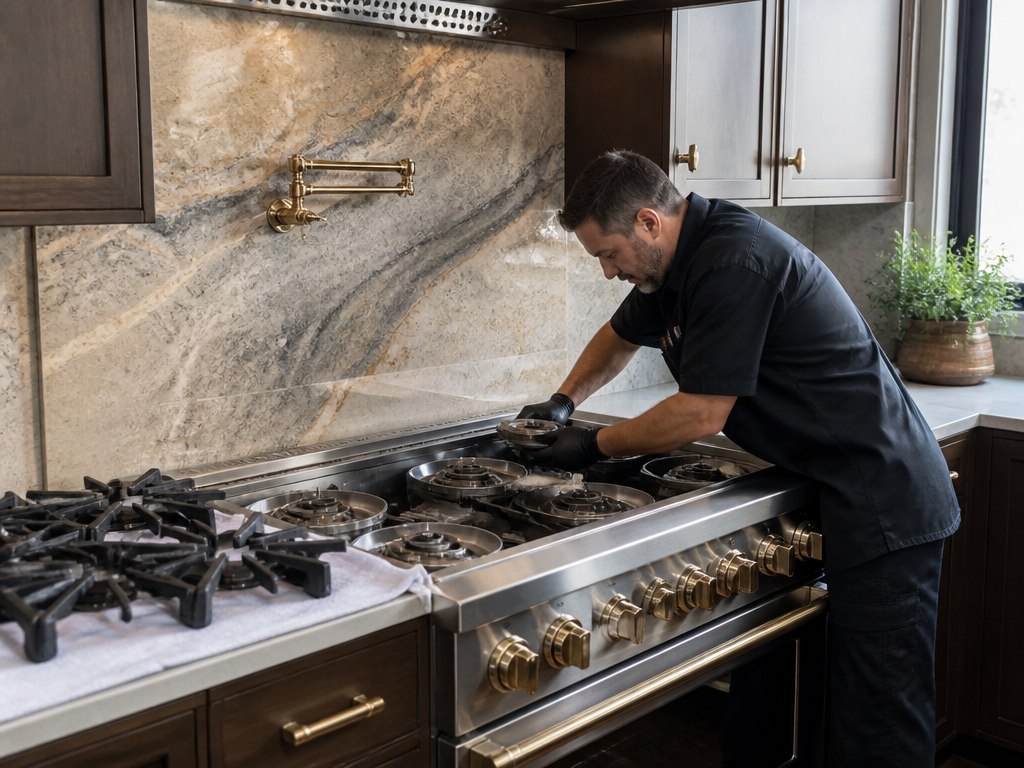
When one gas burner clicks repeatedly, lights only on one side or takes several attempts to ignite, the safest first checks are visible and external. A burner cap that is slightly off-center can disrupt the flame path, and moisture left after cleaning can make ignition unreliable even though nothing is broken.
Wait until the cooktop is cool. Remove only the burner parts the user manual identifies as removable, then make sure the cap and ring are clean, dry and seated correctly. Food residue in the burner ports can change the way gas reaches the igniter. Use only the cleaning method recommended for the appliance; do not enlarge ports with metal tools or modify the burner.
The use manual for one Bertazzoni gas range says to press in the knob, turn it counter-clockwise to HIGH and keep holding it for 5 to 10 seconds after the burner lights. Each burner has a thermocouple flame-failure device that cuts the gas if the flame goes out, and it must heat for a few seconds before the knob is released. The US FAQ describes a burner that needs two or three tries as explained by that heating time, and suggests holding the knob on high for 4 to 5 seconds after lighting.
A dual-fuel range manual describes the spark as coming from the metal tip of the white ceramic pin beside the burner, and says to release the knob gently once the flame is on. It adds that lighting at maximum lets the thermocouple heat fastest, and that if the flame goes out the procedure should be repeated. Not releasing the knob too soon is therefore the first thing to rule out.
Compare the problem burner with one that works normally. Does the igniter spark with the same rhythm? Does the flame appear around the full burner once lit? Does the issue happen only after cleaning, or has it gradually become more frequent? Those observations can separate a seating or contamination issue from an igniter, wiring or gas-delivery problem.
Repeated clicking after the flame is established can also be caused by moisture or contamination around the sensing area. Give freshly cleaned components time to dry completely. If the burner continues clicking, do not keep cycling it indefinitely. A persistent ignition problem needs proper inspection.
The table below pairs common burner symptoms with what they can suggest and what is safe to check.
| Symptom | What it can point to | What you can safely check |
|---|---|---|
| Lights, then goes out when the knob is released | The flame-failure device had not heated long enough, or the cap is misplaced | Relight and hold the knob longer, then check that the cap is centered |
| Clicks but no flame | The gas supply valve being off or the supply interrupted, per one manual | Confirm the supply valve and check that the burner parts are dry |
| No spark at all | A tripped circuit, a blown fuse or the range not connected to power, per one manual | Check the breaker and power to the range |
| Keeps sparking after the flame lights | Ignition micro-switches stuck engaged, which the manual says needs a qualified technician | Turn the burner off and do not keep cycling it |
| Large, distorted or yellow flame | Clogged ports or a gas type setting that does not match, per one manual | Clean ports as the manual describes; gas conversion is not an owner task |
| Flame only on part of the burner | A cap that is not seated or blocked ports | Reseat the cap and check that the flame burns fully around it |
Gas odor changes the situation completely. If you smell unburned gas strongly or continuously, stop using the appliance, avoid creating sparks or flames, leave the area if necessary and follow local gas-utility or emergency guidance. Do not attempt internal gas-valve or pressure adjustments.
The manual describes a good flame as stable and blue. Yellow flames need further adjustment, slight yellow tips on LP gas are normal, and some orange is normal and fades with use as airborne impurities burn off. The flame should burn completely around the cap, and it should not extend beyond the base of the pan, since tips beyond the pan can damage cookware handles. A flame that looks wrong after the cap and ports have been checked belongs with a technician, because adjusting the gas supply or converting between natural and LP gas must be done by a qualified installer or service agency.
For broader safe-use habits, read Gas Range and Oven Safety: The Habits Worth Building. If the symptom is accompanied by an unusual odor or smoke, see A Burning Smell From Your Range or Oven: What It Means to Stop Now.
A technician should handle failed igniters, internal wiring, switches, valves and gas-pressure diagnosis.
The US FAQ says this is explained by the thermocouple needing to heat up, and recommends holding the knob on high for 4 to 5 seconds after lighting. If it still fails, check the cap position and dryness before booking.
The manuals for several models say burners can be lit with a match or gas lighter, and the flame-failure devices keep working. Follow the manual for your model, and stop if you smell gas.
Not necessarily. Moisture or debris can cause continued clicking, but one dual-fuel manual also lists stuck ignition micro-switches as a cause that needs a qualified technician.
Induction or electric cooktop not heating or responding? We diagnose Bertazzoni cooktop faults safely and precisely.
Oven not heating, uneven baking, or showing an error? We diagnose Bertazzoni oven faults with a safety-first approach.
Bertazzoni cooktop diagnostics and repair — induction detection, heating and control faults.
Bertazzoni oven diagnostics and repair — heating, temperature accuracy and error codes.
A single weak burner is most often a seating or cleanliness issue with that burner's cap and ports rather than a gas supply problem.
Yes, once the range is off and cool, cleaning caps and grates with a soft brush and approved cleaner is a normal homeowner task.
Stop immediately, leave the area, and contact your gas provider — do not continue any inspection yourself.
Wine storage problems are easy to miss because the display can still look normal while the cabinet is slowly drifting away from its setpoint. The first useful step…
A modern refrigerator is not silent. Fans speed up and slow down, the compressor changes tone, refrigerant moves through the system and the ice maker cycles. The useful…
Uneven browning does not automatically mean the oven is “running hot.” Rack position, cookware, convection airflow, door opening and food placement can all create a repeatable pattern before…
Share a few details and we’ll confirm an appointment. Prefer to talk? Call us and we’ll help right away.