

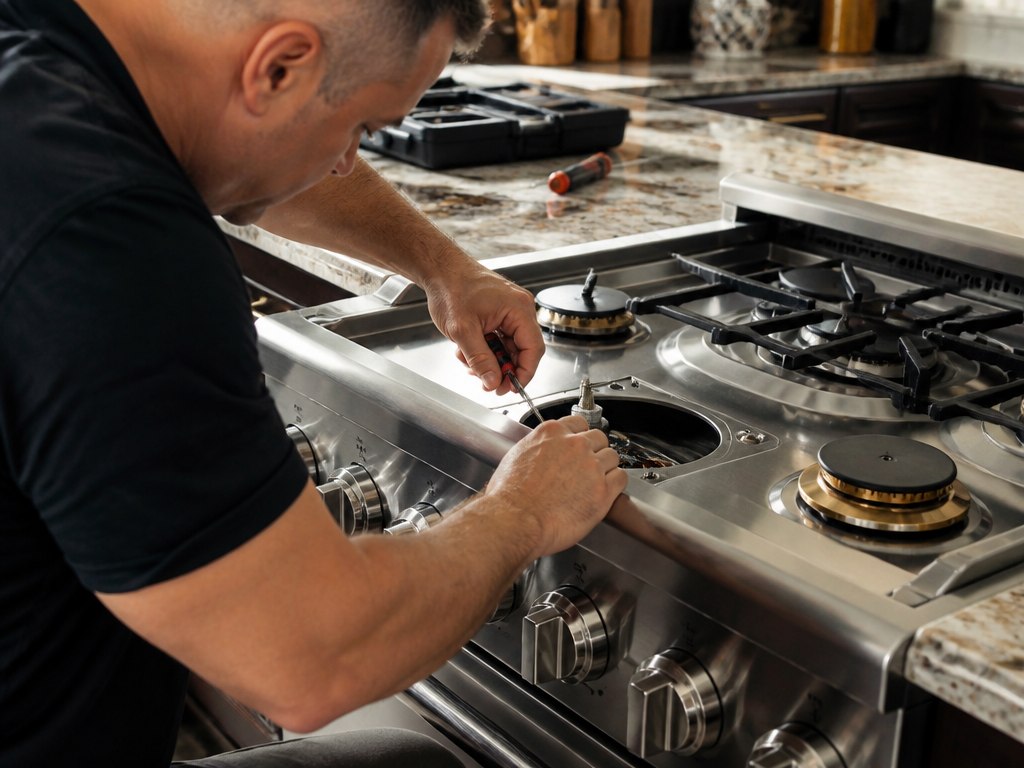
A gas range rewards good habits: a clean burner, a steady flame, and an owner who knows what an off smell means. None of that requires technical skill, only attention.
This is not a repair guide for gas components — those repairs belong to a licensed technician or your gas utility. It is a guide to the everyday judgment calls that keep a gas kitchen safe.
What a healthy flame looks like
A properly adjusted burner on a Bertazzoni range burns with a steady blue flame and lights within a second or two of turning the knob. Small yellow tips can appear briefly during ignition, but a flame that stays yellow, orange, or lifts off the burner is not normal.
Soot on cookware, a burner that clicks but will not catch, or a flame pattern that looks different from the others are worth noting, but none of them justify adjusting a gas fitting yourself.
- Steady, mostly blue flame across all ports
- Ignition within a couple of seconds
- No soot buildup on the bottom of pots
The one rule that overrides everything else
If you smell gas, do not look for the source, do not operate any switch or appliance, and do not light a match to test anything. Leave the area, and once you are safely away, contact your gas utility or emergency services.
This applies whether the smell is faint or strong, brief or constant. Gas issues are the one category of appliance concern where the instruction is always the same: leave first, investigate later, and only with professionals.
Safe to try
- Keep burner caps and ports clean
- Maintain kitchen ventilation
- Leave immediately at any gas odor
Leave to a technician
- Adjust a gas valve or regulator
- Search for a leak using a flame
- Reconnect a gas line yourself
Good burner habits keep a gas range performing the way it should, but they are separate from gas safety itself. Treat any gas odor as urgent every time, and leave gas-line and valve work to licensed professionals.
Frequently asked questions
A brief yellow tip during ignition can be normal, but a flame that stays yellow or lifts off the burner should be checked by a technician.
Leave the area without operating any switches or appliances, then contact your gas provider or emergency services from a safe location.
Yes, cleaning cool, disconnected burner caps and ports with the manufacturer's recommended method is a normal homeowner task.
Similar articles
Water Near an Outlet: The One Situation That Overrides Every Other Rule
When water and electricity meet near an appliance, the response is always the same: power off first, everything else second.
A Burning Smell From Your Range or Oven: What It Means to Stop Now
Some smells are a warning label, not a symptom to work around. Here is how to respond safely.
Electrical Warning Signs Every Kitchen Should Take Seriously
Sparking, tripped breakers, and scorch marks are not routine appliance quirks — here is how to respond.