

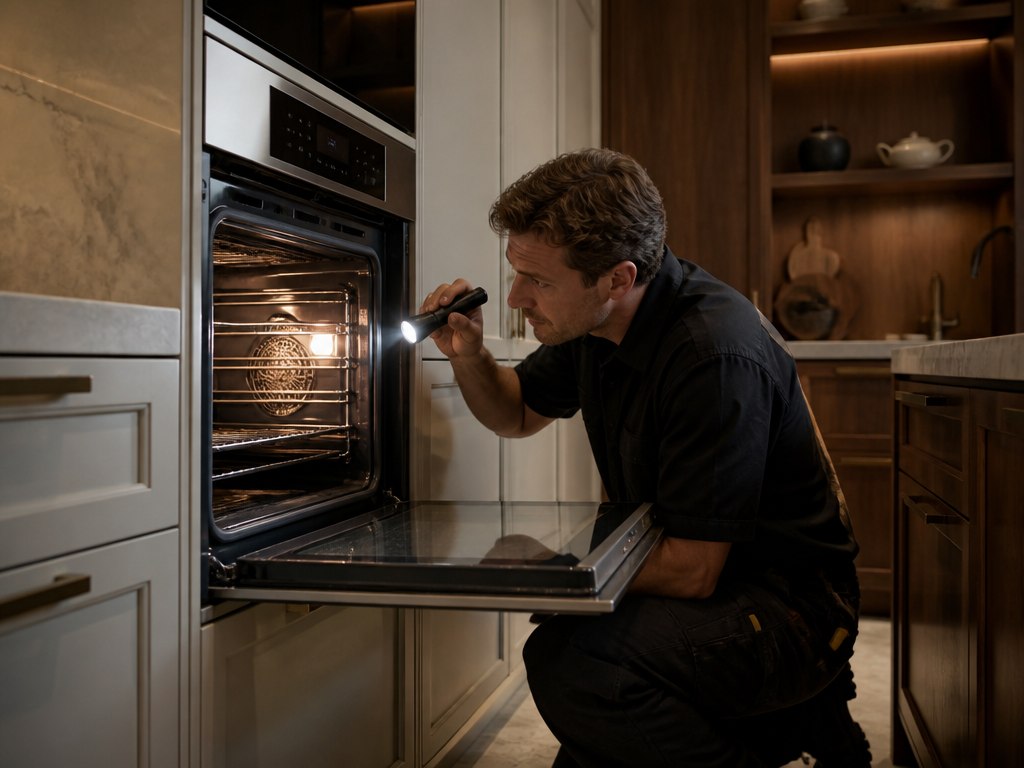
The cycle indicator says the self-clean program is done, but the door will not budge. Before assuming something has broken, it helps to understand what that lock is actually protecting against.
Self-clean cycles push a Bertazzoni oven well above normal cooking temperature to burn off residue, and the door lock is a deliberate safety feature tied to that heat, not a separate mechanism that can simply be released on demand.
Why the lock outlasts the cycle
Interior temperatures during self-clean can remain high for an hour or more after the program ends, even though the display may show the cycle as complete. The control system keeps the door locked until it senses a safe temperature range.
This is normal behavior, and forcing the handle will not speed up the cooldown. It only risks damaging the latch mechanism, which then requires a repair that would not otherwise have been necessary.
| What you see | What it means | What to do |
|---|---|---|
| Cycle complete, door locked, oven warm | Cooling safeguard active | Wait for full cooldown |
| Door unlocks once cool | Normal operation | No action needed |
| Still locked once fully cool | Possible latch fault | Book a diagnosis |
When it stops being a waiting game
If the oven has been off and at room temperature for a couple of hours and the door remains locked, or the display shows a fault code related to the lock, this moves from normal behavior to something a technician should look at.
Do not attempt to manually release the latch by force or by removing panels, since the mechanism is tied to both the lock and the oven's control board.
Before you call for service
Note the model number, whether the display shows any code, and how long the door has been locked after the oven felt cool to the touch near the vents. That timeline helps a technician assess the fault quickly.
Patience solves the great majority of these situations, since the lock is doing exactly what it was designed to do. If the door is still locked well after the oven has cooled, that is the point to schedule an independent repair visit rather than continue to wait.
Frequently asked questions
It varies by model, but it is normal for the lock to remain engaged for up to an hour or more after the cycle ends while the oven cools.
No. Forcing the handle can damage the latch and door mechanism, turning a temporary safety lock into an actual repair.
That points to a latch or control fault, and it is a good time to arrange an independent diagnosis.
Similar articles
When a Wine Cooler Needs Real Diagnostic Tools, Not Just Patience
Some wine cooler symptoms go beyond homeowner checks and call for proper testing.
Before You Book a Fridge Repair, Get an Actual Temperature Reading
A thermometer and a few patient hours tell a technician more than a description ever could.
Ice Maker Empty Before Guests Arrive? Check These First
Settings, supply, and simple timing explain most "no ice" situations.