

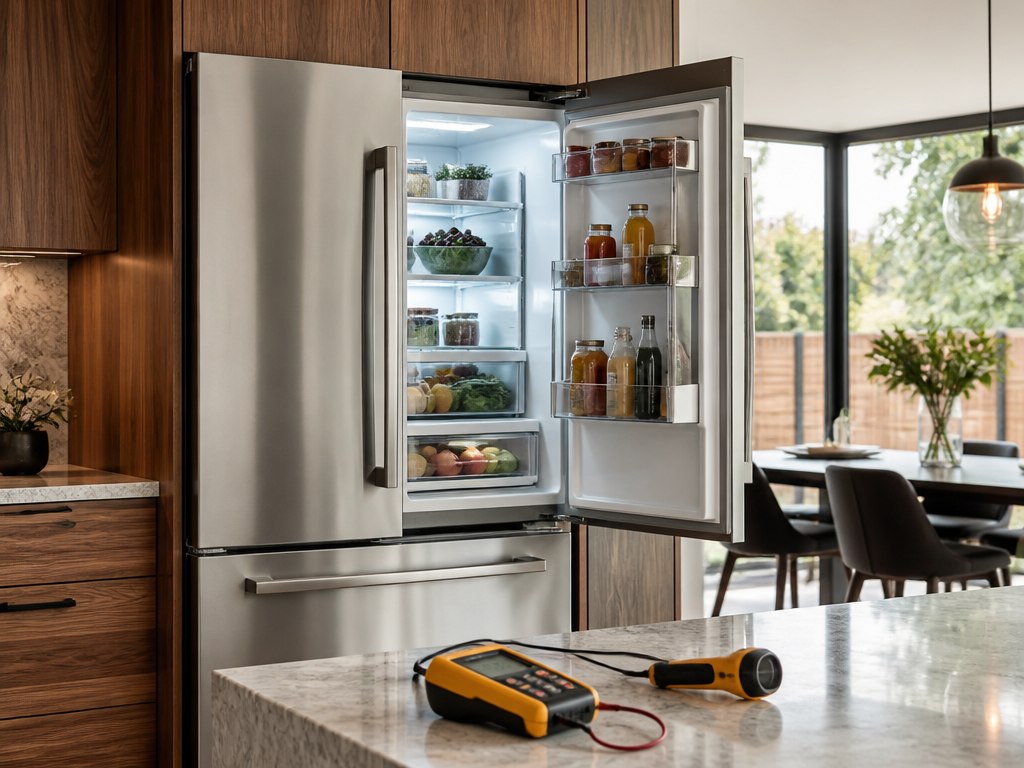
"It doesn't feel cold enough" is a real observation, but it is not a measurement, and a technician can work much faster with an actual number than with an impression.
This is a simple, low-effort step that takes patience more than skill: put a thermometer in place, leave the doors alone, and let the appliance settle into its normal operating pattern.
How to take a reading that means something
Place an accurate appliance or kitchen thermometer in a glass of water in the center of the fresh-food section, close the door, and avoid opening it for at least two to three hours so the reading reflects steady-state performance rather than a moment right after the door was open.
Do the same for the freezer if that section is also in question, and write down both the reading and the control panel's current setpoint at the same time.
| Reading | Likely meaning | Suggested action |
|---|---|---|
| Within a couple degrees of setpoint | Controls working correctly | Recheck door seals and loading |
| Fresh food warm, freezer cold | Airflow-related issue | Note both readings for the technician |
| Both sections warm | Cooling system issue | Protect food, book service |
What this saves everyone
A technician arriving with a known temperature reading, a setpoint, and a timeline of when the problem started can usually narrow down the likely cause before opening a single panel, which often means a shorter, more accurate visit.
It also protects you from an unnecessary repair — sometimes a reading that seemed alarming turns out to be within normal range once measured properly, especially right after a large grocery haul or a long power outage.
Safe to try
- Use an accurate thermometer
- Limit door openings during the test
- Record both compartments and the setpoint
Leave to a technician
- Open sealed refrigerant components
- Probe internal wiring or circuit boards
- Move a built-in unit out of its cabinet alone
A couple of hours with a thermometer turns a vague complaint into useful data. Bring that information to an independent technician, and let them handle everything beyond the accessible controls and door seals.
Frequently asked questions
Any accurate appliance or kitchen thermometer works; placing it in a glass of water gives a steadier reading than air temperature alone.
Two to three hours without opening the door gives a more reliable, steady-state reading.
Share the reading, the current setpoint, when the issue started, and whether one or both compartments are affected.
Similar articles
When a Wine Cooler Needs Real Diagnostic Tools, Not Just Patience
Some wine cooler symptoms go beyond homeowner checks and call for proper testing.
Ice Maker Empty Before Guests Arrive? Check These First
Settings, supply, and simple timing explain most "no ice" situations.
Induction Cooktop Won’t Recognize a Pan? Check the Cookware First
Induction heats the pan directly, so the wrong cookware — not the cooktop — is the most common cause of "no heat".