

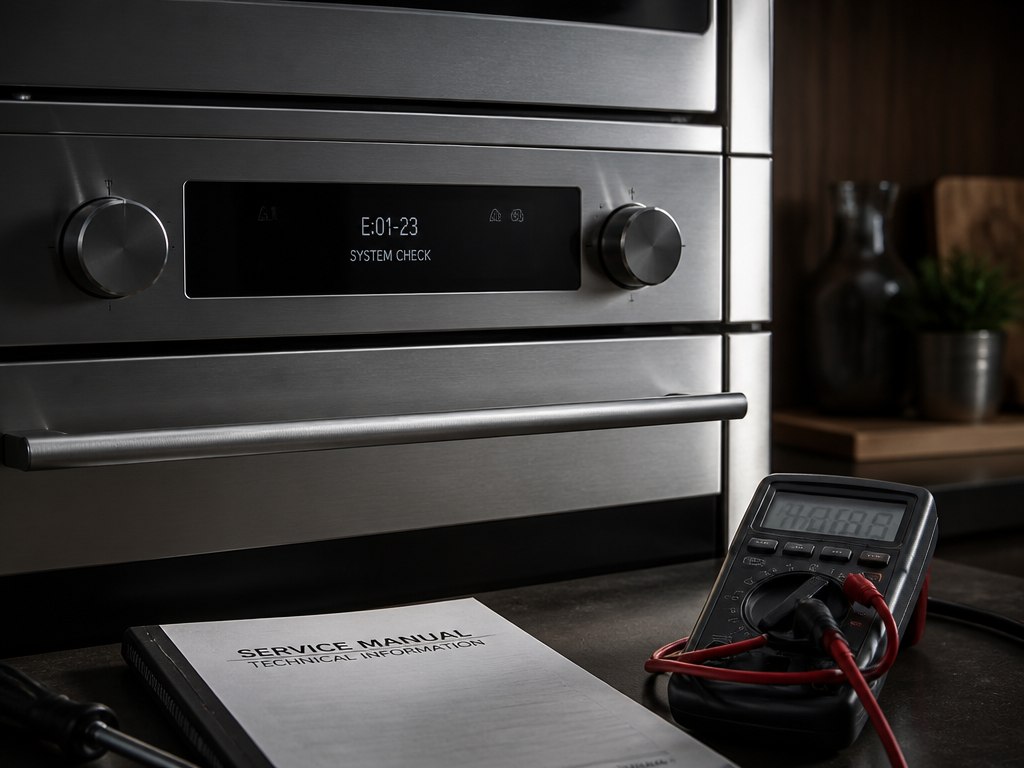
Independent appliance repair has a genuinely useful role for homeowners: checking settings, cleaning accessible parts, and understanding a symptom well enough to describe it clearly. It is not a substitute for training, tools, or certification.
This is less a repair guide and more a boundary line — a way of knowing which side of a task you are standing on before you start.
What sits safely on the homeowner side
Reading a manual, cleaning a filter, checking a setting, wiping a seal, and clearing a visible obstruction are the kinds of tasks appliance manufacturers themselves describe as homeowner maintenance — they require no special tools or training.
Noticing patterns is just as valuable: whether a symptom happens every time or only sometimes, what settings were in use, and when it started are all information worth having ready before calling for service.
- Reading the manual for model-specific guidance
- Cleaning filters, seals, and accessible components
- Noting error codes, sounds, and symptom patterns
What always belongs to a technician
Anything involving gas lines, sealed refrigerant systems, internal wiring, heating elements, or control boards requires equipment and training a homeowner does not have — and attempting it without both usually turns a diagnosable fault into an unpredictable one.
Warning signs also override any checklist: a burning smell, sparking, a gas odor, or water near live electrical parts mean stop and call for help immediately, regardless of how simple the fix might look.
Safe to try
- Clean and maintain accessible parts
- Follow manual-approved settings and adjustments
- Record symptoms clearly before calling for service
Leave to a technician
- Repair gas connections or valves
- Open sealed refrigeration systems
- Test or replace internal wiring and control boards
Knowing this boundary protects both the appliance and the person standing in front of it. Handle what is genuinely safe to handle, and bring in a qualified independent technician for everything on the other side of that line.
Frequently asked questions
If it's described in the use-and-care manual as homeowner maintenance and doesn't involve gas, electricity beyond a plug, or a sealed system, it's generally safe.
Looks can be deceiving — internal wiring and control boards should always be left to a licensed technician, regardless of how straightforward the fix appears.
The model number, a clear description of the symptom, when it started, and the results of any safe checks you've already made.
Similar articles
Water Near an Outlet: The One Situation That Overrides Every Other Rule
When water and electricity meet near an appliance, the response is always the same: power off first, everything else second.
A Burning Smell From Your Range or Oven: What It Means to Stop Now
Some smells are a warning label, not a symptom to work around. Here is how to respond safely.
Electrical Warning Signs Every Kitchen Should Take Seriously
Sparking, tripped breakers, and scorch marks are not routine appliance quirks — here is how to respond.