

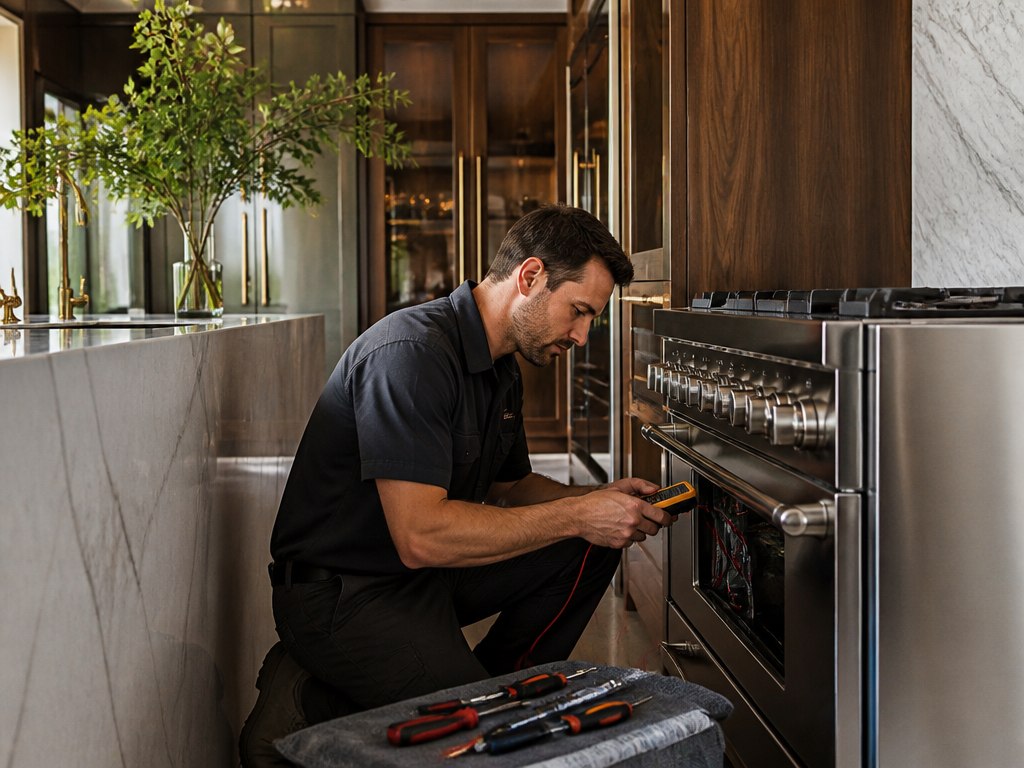
There is a difference between the faint smell of a new oven breaking in and the sharp, persistent odor of something overheating. The second one is not a puzzle to solve with another cooking cycle — it is a signal to stop.
Bertazzoni ranges, ovens, and cooktops are built for daily, heavy use in real kitchens, but no appliance is designed to keep running once insulation, wiring, or a component starts to overheat. This guide is about recognizing that line and responding calmly.
New-appliance odor versus a warning sign
A light odor during the first few uses of a new oven, often described as a factory or paint-like smell, can be normal and typically fades after a couple of empty preheat cycles with the kitchen ventilated. It should lessen each time, not intensify.
A smell that appears suddenly on an appliance that has been running fine for months, gets stronger, or carries an acrid, plastic, or electrical character is a different situation entirely and should not be treated the same way.
| What you notice | Likely explanation | What to do |
|---|---|---|
| Mild smell, brand-new oven | Protective coating burning off | Ventilate, run empty preheat cycles |
| Sudden acrid or plastic smell | Possible overheating component | Stop use immediately |
| Smell returns every use, worsening | Developing fault | Book an inspection |
What to do in the first two minutes
Turn off the appliance at the control panel if it is safe to reach, and if you can do so without touching a warm surface, switch off power at the breaker. Do not open the oven door and look for the source with your face near the vents.
Move people and pets out of the kitchen if smoke is visible, and do not spray water or an extinguisher toward electrical components. A working smoke detector nearby is worth checking on a normal schedule, not just during an incident.
Safe to try
- Turn the appliance off
- Isolate power at the breaker if safe
- Ventilate the room
Leave to a technician
- Keep using the appliance to "see if it stops"
- Open a hot panel to inspect wiring
- Spray liquid near electrical parts
A burning smell is one of the few appliance symptoms that deserves an immediate stop rather than a wait-and-see approach. Once the appliance is off and the area is safe, an independent technician can identify the source without guesswork or risk.
Frequently asked questions
A mild, fading odor during the first few preheat cycles can be normal; a smell that intensifies or smells electrical is not.
Stop using the appliance any time a burning smell is new, strong, or getting worse, even if it seems faint at first.
An independent appliance repair technician can inspect the unit safely; avoid removing panels or restarting the appliance beforehand.
Similar articles
Water Near an Outlet: The One Situation That Overrides Every Other Rule
When water and electricity meet near an appliance, the response is always the same: power off first, everything else second.
Electrical Warning Signs Every Kitchen Should Take Seriously
Sparking, tripped breakers, and scorch marks are not routine appliance quirks — here is how to respond.
Gas Range and Oven Safety: The Habits Worth Building
A few daily habits and one hard rule about gas odor keep a gas kitchen safe.