

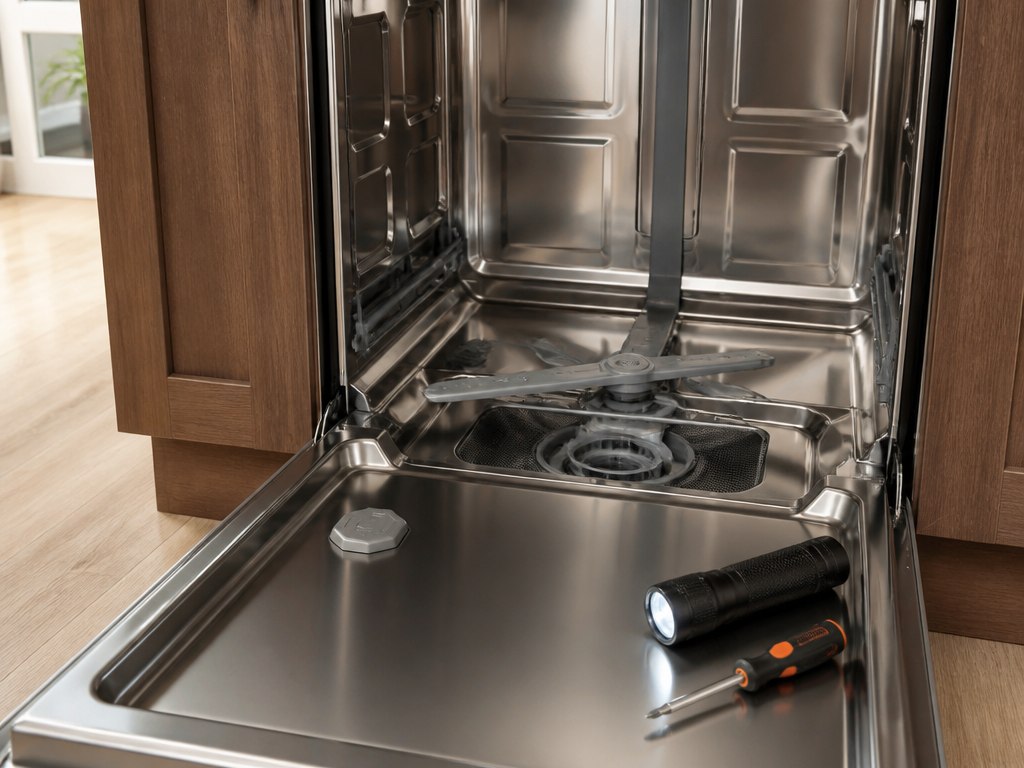
Cloudy glasses, gritty plates, and a faint smell after a cycle finishes often get blamed on detergent or water hardness, but the more common culprit is sitting right at the bottom of the tub: the filter.
Unlike older dishwashers with a fixed grinder, most current models rely on a homeowner-cleanable filter to keep food particles out of the wash water, which means it needs occasional attention to keep working as intended.
Finding and removing the filter safely
With the dishwasher off and empty, locate the filter assembly at the bottom of the tub, usually a round or cylindrical piece that twists to unlock. The manual will show the exact motion for your model — most turn a quarter turn before lifting straight out.
Rinse it under warm running water, using a soft brush to work debris out of the mesh, and check the housing underneath for anything that fell through before refitting the filter securely.
| Task | How often | Method |
|---|---|---|
| Rinse filter under warm water | Monthly | Remove per manual, rinse mesh |
| Brush out stuck debris | As needed | Soft brush, no metal tools |
| Check housing beneath filter | Each cleaning | Wipe gently, no reaching further |
Signs it has been overdue
Cloudy glassware, a gritty residue on plates, standing water at the end of a cycle, and a faint odor when the door opens are the classic signs of a filter that needs attention before anything else is checked.
A pre-rinse habit for dishes reduces how quickly the filter loads up, but it does not eliminate the need for a periodic cleaning — even light use benefits from a monthly check.
Safe to try
- Rinse the filter under warm water
- Use a soft brush for stuck debris
- Refit the filter securely afterward
Leave to a technician
- Run the dishwasher with the filter removed
- Use metal tools that could damage the mesh
- Reach into the pump area beneath the filter housing
A five-minute filter cleaning resolves more dishwasher performance complaints than any other single homeowner task. If cleaning results stay poor after a thorough rinse, that is the point to look at spray arms, water supply, or arrange a diagnosis.
Frequently asked questions
Monthly is a good baseline, more often for heavy use or households that don't pre-rinse dishes.
Cloudy glasses, gritty plates, standing water, or a faint odor after a cycle are the most common signs.
Yes — it can allow debris into the pump and spray system, so always refit the filter before running a cycle.
Similar articles

Cellar-Like Conditions at Home: Caring for a Built-In Wine Column
Stable temperature, clean seals, and steady habits protect both the appliance and what's stored inside it.

Keeping a Panel-Ready Bertazzoni Refrigerator Running Like It Looks
Built-in refrigeration depends on the airflow and clearances designed into the cabinetry around it.

Dryer Vent Care: The Maintenance Task That’s Also a Safety Task
Clearing lint and checking the vent path improves drying time and reduces a genuine fire risk.