
Uneven browning does not automatically mean the oven is “running hot.” Rack position, cookware, convection airflow, door opening and food placement can all create a repeatable pattern before a sensor or heating…
When one side of the tray browns first, check the setup before suspecting a fault: rack position, pan type and size, convection airflow and how often the door is opened. If the same side leads across different pans and recipes after a controlled test, a technician can look at sensors, elements and the convection fan.
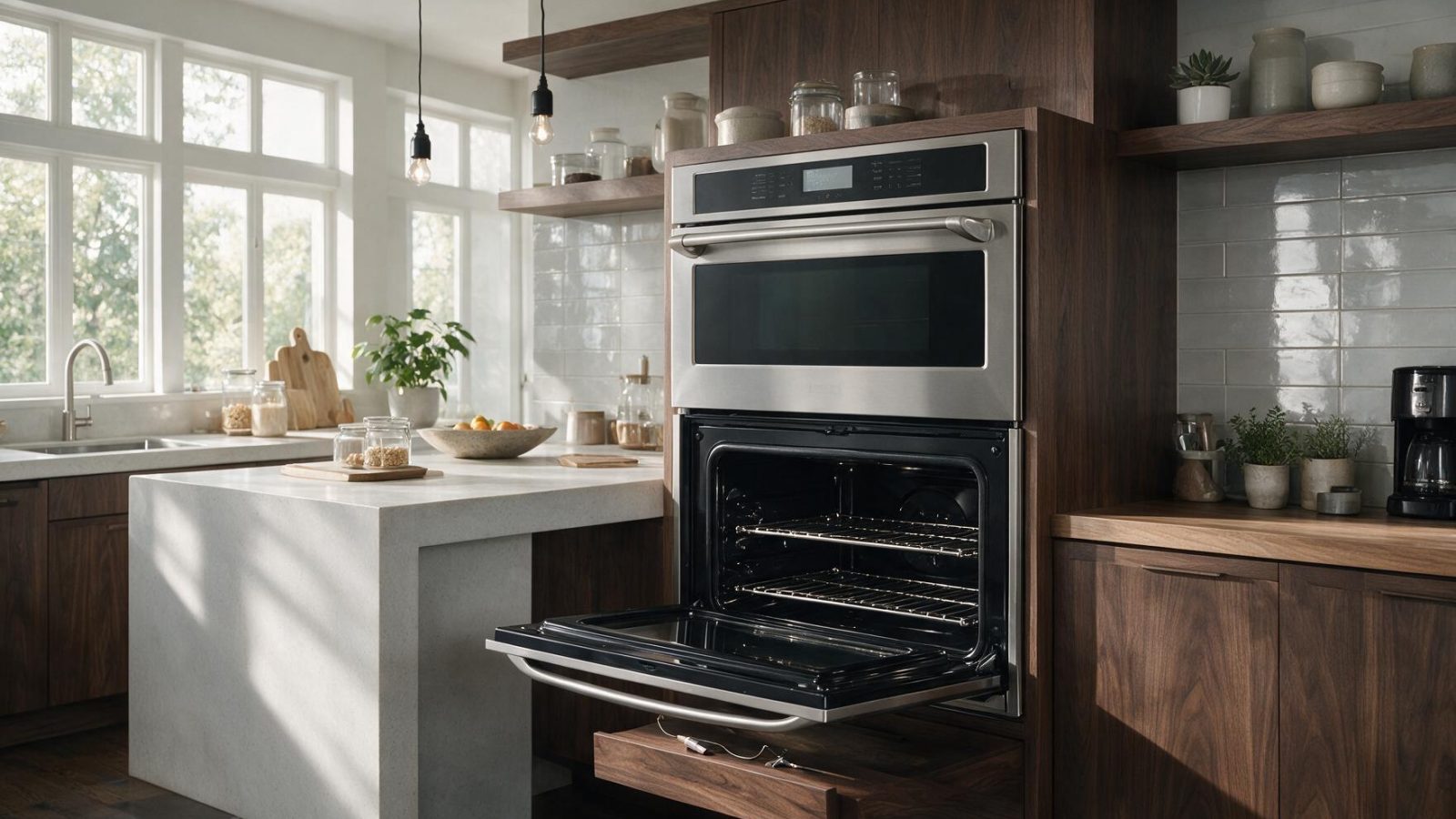
Uneven browning does not automatically mean the oven is “running hot.” Rack position, cookware, convection airflow, door opening and food placement can all create a repeatable pattern before a sensor or heating component becomes the main suspect.
Start with the simplest comparison. Use the rack position recommended for the cooking mode and center a single tray rather than loading several levels. Dark pans absorb heat differently from shiny aluminum, and thin sheets react faster than heavy cookware. If you change pan type and rack position at the same time, you lose useful information, so adjust one variable per test. The use-and-care manual for one Bertazzoni range says the incorrect rack position is among the causes of top or bottom browning, as are an oven that has not preheated and the wrong bake setting.
Convection modes add another factor: airflow. A tray pushed too close to a wall, foil blocking circulation or an oversized pan can create hot and cool zones. Make sure the oven cavity and fan area are unobstructed. Avoid lining surfaces in ways the manual does not recommend. On many Bertazzoni ovens the fan runs only in certain modes, so a pattern that appears only in convection and not in plain bake is a useful clue.
The manual for one Bertazzoni range says oversized baking sheets, roasting pans and cakeware act as a baffle and should leave at least one inch of space on all sides. It also advises removing the grill pan when it is not in use and turning bakeware during cooking if needed. A pan that nearly fills the shelf can block air from reaching one side, which produces the repeatable one-sided pattern you are describing.
The same manual says that with fan-assisted modes the recipe temperature should be reduced by 70 F compared with conventional cooking, and recommends convection bake for multiple racks. A recipe written for conventional bake used unchanged in convection can brown fast on whatever side the air meets first.
If the same side still browns faster across different recipes and pans, check temperature more systematically. A reliable oven thermometer can help identify a large, persistent offset, but remember that oven temperature naturally cycles above and below the setpoint. One instant reading is not enough; watch the pattern across a full preheat and cooking period.
Door behavior matters too. Opening the door repeatedly changes heat distribution and extends recovery time. A door that does not seal evenly can create a more persistent imbalance. Inspect the gasket visually without pulling or modifying it.
The manual for one Bertazzoni dual fuel range says pan type affects browning: light non-stick or anodized pans give tender golden crusts, while dark pans give crisper crusts and may need the bake temperature lowered by 25 F. Check what your own manual says for your model. That means the same dough in two different pans can brown differently without any oven fault at all.
| Symptom | What it can point to | What you can check |
|---|---|---|
| Pattern appears only with one pan | Pan color, size or contact with the oven wall | Swap to a lighter or smaller pan and repeat |
| Pattern appears only in convection | Airflow blocked, or convection temperature not adjusted | Check clearance around the pan and lower the recipe temperature |
| Top or bottom browns too much | Rack position, preheat or bake setting | Move the rack, wait for the preheat tone, confirm the mode |
| Same side leads with every pan and recipe | Sensor, element, fan or control behavior | Run the controlled test and book diagnosis |
If a consistent temperature gap remains after controlled tests, the technician may need to evaluate sensors, heating elements, convection fan operation, calibration and control behavior. That is especially true when one cooking mode behaves differently from another.
Preheat also matters because the manual for one model says the oven signals the end of preheating with a tone, and loading food before that point changes the first minutes of browning.
For a locked door after high-temperature cleaning, see Self-Clean Cycle Finished But the Oven Door Is Still Locked?. For safety around new odors, read A Burning Smell From Your Range or Oven: What It Means to Stop Now.
Bake the same simple item on one centered tray, using the same pan and rack position, after a full preheat. Note which side browns first and whether the pattern repeats on another day. That repeatability gives a technician far more useful information than “the oven cooks weird.”
Heat and airflow are rarely perfectly even, and pan size, rack position and convection can exaggerate the difference. Turning the tray partway through baking and keeping space around it often reduces the gap.
The manual for one Bertazzoni range says to reduce the recipe temperature by 70 F with fan-assisted modes. Check your own manual for the figure that applies to your model.
Yes, foil that blocks circulation can create hot and cool zones. Use it only as the manual recommends and keep it clear of the oven walls and fan area.
If the pattern moves when you change the pan or rack, the oven was probably behaving normally and the setup was the variable. If it stays on the same side through three different pans, the difference is in the oven and worth reporting. Check the door gasket visually and make sure the door closes evenly, because a gap on one side can feed heat loss to that side.
Yes, when there's enough clearance around the tray for air to circulate; a crowded oven limits its benefit.
Place an oven thermometer in different spots on the same rack during a normal bake and compare readings.
When a real, repeatable temperature gap remains after adjusting tray position, clearance, and preheating.
Wine storage problems are easy to miss because the display can still look normal while the cabinet is slowly drifting away from its setpoint. The first useful step…
When one gas burner clicks repeatedly, lights only on one side or takes several attempts to ignite, the safest first checks are visible and external. A burner cap…
A modern refrigerator is not silent. Fans speed up and slow down, the compressor changes tone, refrigerant moves through the system and the ice maker cycles. The useful…
Share a few details and we’ll confirm an appointment. Prefer to talk? Call us and we’ll help right away.